wapwing.blogspot.in. Powered by Blogger.

Showing posts with label Nokia. Show all posts

The Best Nokia Phones of All Time

“With the Launch of Nokia 6 in Chinese Market Nokia is back with a Bang with Registrations of 25 lakh Mobiles within 60 secs.We take a look at some of the most iconic Nokia mobile phones ever”

Nokia reigned as the king of the phone industry for a long period of time, before it eventually withered away and moved into the annals of cellphone history. While waiting for the next chapter in the Nokia’s book to unfold, we decided to travel back in time and take a look at some of the most iconic phones from the brand which we wouldn’t mind buying even today. So, grab some tissues as a wave of nostalgia is about to hit you.

Nokia 8110

Nokia 8110 Image

Remember the scene in the first Matrix movie where Neo was escaping from agents in his office whilst talking to a mysterious man on a mobile phone? Well, the person Neo was talking to was Cypher and the phone he used was the Nokia 8110, which made news back in the day owing to its unique slider design which could be used to answer or end calls.

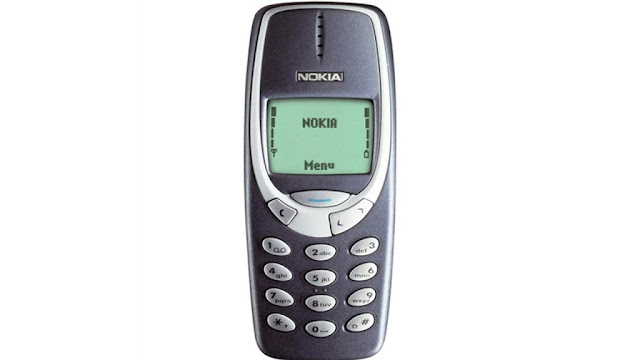
Nokia 3310

Nokia 3310 Image

Not a lot of people had a mobile phone back in 2000, but if you did, chances are it was the Nokia 3310. Perhaps the most popular Nokia device, the 3310 still holds the benchmark for a smartphone’s durability and is extensively used in a host of internet memes even today. Regardless of how good mobile games might be today, they still fall short of the hours of fun Snake II had to offer.

Nokia 6600

Nokia 6600 Image

The 6600 was a quirkily designed Nokia mobile phone which garnered huge success. Be it the ginormous VGA camera on the back or the support for Bluetooth and infrared, the 6600 had it all back in the day. Not to mention, the device came with a joystick instead of a D-pad which was compatible with certain games as well.

Nokia Communicator E90

Nokia E90 Communicator Image

Nokia revamped its iconic communicator series with the E90 which sported a laptop-like profile and dual-displays. The idea was that the smartphone could be used as a normal mobile phone with the flap closed and could offer extra room to enhance productivity with the larger 4-inch display that was housed within.

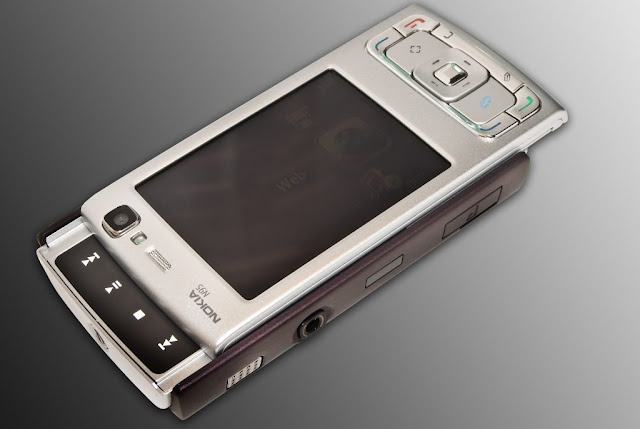
Nokia N95

Nokia N95 Images

Nokia’s answer to Apple’s iPhone came in the form of N95, the most powerful smartphone for the year 2007. The device came with features like GPS along with a 5MP camera which was way ahead of its time. Toting a dual-slider form factor and support for 3.5G, the N95 was the biggest threat to Apple’s iPhone and a ‘flagship killer’ before the term was cool.

Nokia N900

Nokia N900 Image

The first and the only phone to run Linux-based Maemo OS, the Nokia N900 combined the productivity of the communicator series with the media-centric approach taken by the N series.

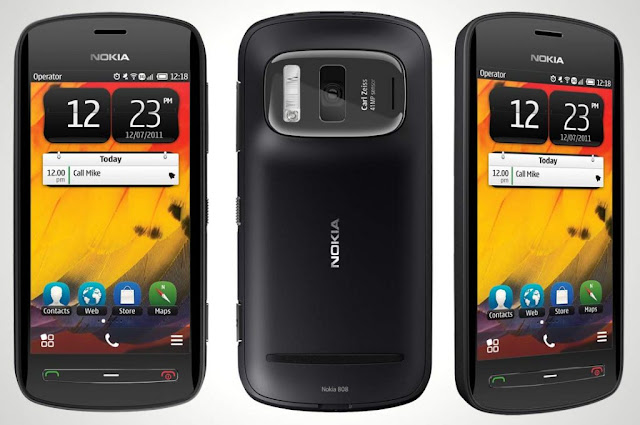
Nokia Pureview 808

Nokia Pureview 808 Image

The USP of Nokia’s Pureview 808 was the massive 41MP camera sensor at the back, which to this date, is the biggest sensor to be housed within a smartphone. Aided with Pureview technology and Carl Zeiss optics, the device was capable of shooting some incredible stills. However, booting Symbian OS in 2012 made the 808 outdated before one could even open the box it shipped in.

Nokia X7

Nokia X7 Image

One of the frontrunners of Nokia’s Symbian^3 OS which was later renamed to Anna and then to Belle, the X7 brought some refreshing changes to the software side of things with support for portrait keyboard and improved browser experience.

Nokia E71

Nokia E71 Image

The iconic E series from Nokia was aimed to give business professionals something other than a Blackberry to gawk about. Jacketed in a metallic body, the E71 quickly became a fan favourite owing to its optimised email and messaging support. While not as media-centric as the N95 or the N97, the E71 still came with support for Wi-Fi, 3G and A-GPS.

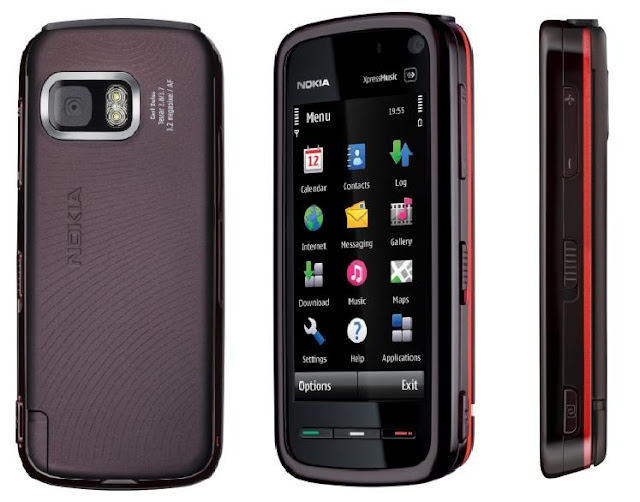
Nokia 5800

Nokia 5800 Image

The phone which made a debut on the big screen with Christopher Nolan’s Dark Knight was the first all-touch smartphone from Nokia which came with an optimised version of the Symbian OS. The mobile phone was a huge hit in the Indian market and shipped with a 3.2MP autofocus camera with a Carl-Zeiss lens.

Nokia Lumia 930 review

Microsoft and Nokia have delivered the best Windows Phone yet.


If you think the new Nokia Lumia 930 looks somewhat familiar, don’t worry.
Way back in March we reviewed a smartphone that’s almost exactly the same: the Nokia Lumia Icon. The Lumia Icon, exclusive to the Verizon network in the US, shares most of its DNA with the Lumia 930, but there are a number of key differences – and we felt that warranted giving the latter its own full review.

READ MORE: Nokia Lumia Icon review

Orange is the new back


The Lumia 930 couldn’t be described as skinny or small. It’s almost a centimetre thick and the 5in screen, even with a fairly narrow bezel, makes it a long, wide handset. But, despite the use of Gorilla Glass 3 and the metal-edged build, it’s not a heavy phone – and we found it sat quite comfortably in a trouser pocket.


The build quality befits the phone’s high-end status. Nokia has always enjoyed a reputation for solidly made gear and that’s certainly the case here: there’s nothing wobbly or creaky in evidence. Nor does the matte plastic back look or feel cheap – it’s a level or two above the plastic you’d find on the back of certain Korean-designed smartphones. The curved edges of the glass front panel also make for a lovely premium touch.
There are three hardware controls on the right-hand metal edge (the nano SIM tray and 3.5mm headphone socket are located on the top edge): a power button; a volume rocker; and a dedicated camera shutter button (more on that below). There’s a microUSB port on the bottom edge but, thanks to the wireless charging plate included in the Lumia 930’s box, you’ll rarely need to make use of that.
The Day-Glo orange finish of our review sample is certainly… eye-catching, and some might feel happier with one of the two more sober colour options: white or black. Oh, and orange isn’t the only wacky colour available: there’s fluorescent green too, if you're feeling particularly brave.

Dream screen


The 5in, 1920 x 1080 OLED screen is one of the Lumia 930’s best features, just as it was on the Lumia Icon. A 1080p resolution may not match the sheer pixel count of a 2K display such as that of the LG G3, but it’s still extremely sharp: the pixel density of 441ppi is still above that offered by leading phones such as the Apple iPhone 5s (326ppi), Samsung Galaxy S5 (432ppi) or Sony Xperia Z2 (424ppi).
It’s not just showing detail at which the Lumia 930’s screen excels: it’s also rich and vibrant when it comes to colour and contrast, bright enough to view outdoors on sunny days (albeit fairly shiny and reflective) and its wide viewing angles mean it stays vivid even when you’re viewing off-centre.
It’s a great all-purpose screen, although its 16:9 ratio makes it particularly suited to displaying video. The one slight issue we found is the presence of some smearing when scrolling through web pages and the like – but it’s hardly a deal-breaker.

What a performance


With a quad-core Snapdragon 800 and 2GB of RAM, the Lumia 930 is a powerful phone, and its AnTuTu Benchmark score reflects that. It racked up a total of 25,051, which puts it the same ballpark as phones such as the LG G2, Samsung Galaxy S4 and Sony Xperia Z1 and a little behind current top-tier models such as the LG G3, Samsung Galaxy S5 and Sony Xperia Z2. That said, it seemed totally at ease with whatever apps and games we chucked at it, and it’s the beefiest Windows Phone currently on sale (bar the equally-specced Lumia 1520, which is more of a phablet thanks to its 6in screen).

Nokia has been making Lumia phones compatible with wireless charging for a while now, but customers have been required to pay extra for a charging plate. That’s no longer the case, and the 930 comes with one in the box. A nice touch, and one that’ll ensure buyers make the most of the phone’s fuss-free charging capabilities.
The 2420mAh battery feels just about adequate for purpose. If you're watching a lot of video, surfing the web often or taking loads of photos, you'll find it may not last an entire day – but less intensive use should see it stretch into a second one.

READ MORE: Nokia Lumia 1520 review


Yes we cam

The 20MP sensor on the rear PureView camera is able to take either 19MP 4:3 ratio photos or 16MP 16:9 photos, and automatically makes a 5MP version of all shots taken for faster uploading and sharing.
The camera has a wide f/2.4 aperture, dual LED flash and Carl Zeiss optics – and it feels like all these combine well to make it one of the finest smartphone snappers around. Both video and stills have superb clarity and colour, it’s more than adequate in low light, and Nokia’s “Living Images” feature is a nice touch: it plays a second or two of video before displaying stills, giving you an impression of a moment in time being captured. The large sensor and wide aperture also enable you to achieve a narrow depth of field in certain instances – and that can always make for lovely looking photos.
The only issue we have is the lack of HDR in the default camera. As you can see in our shot from the hilltop, this can lead to washed-out areas (in this case, the sky) where there's high contrast in a scene.
The default camera app, Nokia Camera, allows you to manually tweak a number of settings (white balance, exposure compensation, shutter speed, flash, ISO and focus) and this, coupled with the hardware shutter button (which you can half-press to focus) makes the Lumia 930 very photographer friendly.
Video, meanwhile, can be captured at 1080p quality in 30fps, 25fps or 24fps, and looks lovely when played back. There are four microphones, allowing you to record in surround sound, and Nokia has included a bass filter that lets you cut out low-frequency audio that could distort voices and other higher frequency sounds.

Windows Phone gets better

 The Lumia Icon came with Windows Phone 8, but the Lumia 930 offers the 8.1 edition of Microsoft’s OS. A .1 update might seem small, but there are a number of useful tweaks stuffed in: the Start screen is more fluid and customisable; there is now a proper notification pane (!) that can be accessed by swiping down on the Start screen; and there’s of course the Cortana personal assistant, Microsoft’s voice-activated answer to Siri and Google Now.
Cortana isn’t officially available yet on UK Windows Phones except in beta, so we can’t say for certain quite how well it (she?) works – but the feeling we get from using the 930 is that, slowly but surely, Windows Phone is improving to a level where it can now look Android and iOS in the eye. Except when it comes to apps.
The fact is, if you buy a Windows Phone handset you don’t have access to anything like as many apps as you would on an Android or iOS device. There are plenty available, including some of the big names such as Instagram, Vine and Spotify – but Windows Phone remains, and probably will remain for some time, the poor cousin of Android and iOS in this regard.

READ MORE: Windows Phone 8.1 review

Nokia Lumia 930 verdict


We liked the Lumia Icon a lot, and we like the Lumia 930 even more. It doesn’t make any drastic improvements to key elements – the screen, camera, performance are all the same – but the inclusion of a wireless charger and Windows Phone 8.1 out of the box make it a better buy. It doesn’t have as much raw power as top iOS and Android phones, nor access to their wealth of apps, but it’s the best Windows Phone yet.

Nokia Lumia Icon Review

This may well be the best Windows Phone on the market – what a shame it’s a US exclusive 
The Nokia Lumia Icon is one of the company’s most powerful and well-equipped.Windows Phone 8 handsets yet, boasting a quad-core processor, huge full HD screen and 20MP camera.
It’s exclusive to the Verizon network in the US, and Nokia has yet to confirm a India launch, but we decided to give it the full review treatment to work out just how jealous we should be.


Classy Build But Not that Stylish 


The Lumia Icon is a large phone and, at almost a centimetre in depth, isn’t especially slim, but it doesn’t feel particularly hefty in your hand or uncomfortable in your jeans pocket
 
It’s well built, too, with a metal-rimmed body and Gorilla Glass 3 screen that curves slightly at the edges. True to Nokia’s reputation, there’s not a hint of creakiness to it. The only thing we’re not too hot on is the white matte plastic back, which feels quite nice to touch but looks somewhat naff, especially with the large “4G” logo and Verizon branding. There are three hardware buttons on the right edge of the phone (volume, power and camera shutter, the latter of which can be half-pressed to focus), a nano SIM tray on the top edge next to a 3.5mm headphone jack, and three capacitive buttons underneath the screen (back, home and search).

A  Screening  Success


The Lumia Icon sports a 5in full HD LCD screen, which works out to 441 pixels per inch. It’s exceptionally vivid and bright, with gloriously juicy colours and sharp detail, and we had no problems using it outdoors in bright sunlight. The image quality remains vivid even at wide viewing angles, too.
While 1080p 5in screens have become almost the standard for higher-end smartphones these days, not all are born equal. The Icon’s display is mostly excellent for whatever you’re watching on it, from games to photos, videos, but there is some slightly off-putting smearing while scrolling quickly down web pages – the only bum note.

As  Powerful  as  the  Best  of  2013


There’s the beefy quad-core Qualcomm Snapdragon 800 processor on board, along with 2GB of RAM, and this makes the Lumia Icon a truly powerful phone. We benchmarked it with AnTuTu and it scored 25,302, putting it roughly in line with the LG G2.
While the Samsung Galaxy S5 and Sony Xperia Z2 are speedier (we’d expect upcoming LG G3 and HTC One replacement to be, too), the Icon should certainly be considered a top-tier smartphone when it comes to processing grunt, and we never once noticed any performance-related sluggishness with apps, games or general UI shenanigans.


Another cracking Nokia camera


There’s a PureView camera, but it’s not the excellent 41MP version used on the Lumia 1020. It boasts instead a (still very respectable) 20MP sensor that takes either 19MP 4:3 ratio images or 16MP 16:9 ratio images, and makes a 5MP copy of any photos you take for quicker sharing. The camera comes with a wide aperture of F2.4, a dual LED flash and Carl Zeiss optics, and all these things fit together to make it a superb snapper by mobile phone standards: images are clear and sharp, and you can get good, crisp results even in very low light conditions.
The default Pro Cam app (which you can bring up straight away by holding down the hardware shutter button, even when the phone is in screen lock mode) offers a host of manual shooting options: focus, exposure, white balance, shutter speed and ISO can all be tweaked, should you wish. It also lets you crop and reframe photos after you’ve taken them.
Video can be captured at 1080p HD quality and either 30, 25 or 24fps, and looks excellent for a phone. We’d have liked a slo-mo 120fps mode, too, but there is one bonus in the inclusion of four separate microphones and thus clearer audio quality than most smartphone videos. We found it picks up gusts of wind quite easily, which is a somewhat unfortunate side effect (at least if you like shooting on moors, rooftops and the like).

Windows Phone is still an issue


There’s no nice way of saying this – but like all Windows handsets, the Icon suffers from a paucity of apps in comparison to iOS and Android. While a lot of the more popular big name apps are available (Spotify, WhatsApp, Facebook Messenger, Twitter, Instagram, Angry Birds), many are nowhere to be found and it's far from the first choice platform for developers with pioneering software. There are no signs of that changing anytime soon, either.

The tile-based Windows Phone UI itself is a joy to use, and despite its different approach to other smartphone interfaces it doesn’t feel particularly unfamiliar or confusing - a clear sign of good design.
Another plus side of Windows Phone is the inclusion of handy, well-made native apps such as Here, Here Drive+, Office and Local Scout. Here, in particular, makes for an excellent alternative to Google and Apple Maps. There’s also a handy 7GB of free OneDrive cloud storage.


Nokia Lumia Icon verdict


The Nokia Lumia Icon is probably the best Windows Phone around at the moment: it bests the Lumia 1020 in every major respect except looks and camera skills, boasts quad-core power and a fantastic screen. And it isn’t even particularly pricey.
Like any Windows Phone, it’s slightly hampered by its app selection, but if it were available in the India we’d suggest it over any other Windows handset.
That being said, the spec is just a little bit "best of 2013", we have little doubt the coming 2014 crop of new Windows smartphones from Nokia and elsewhere may surpass it on specs and design. And that means, in the end, that the lack of availability on this side of the pond may end up being only a fleeting loss.

Nokia Unveils The Android X Series


Finally After much heavy rumor, Nokia has just announced its first Android handsets: the X, X+ and XL.All the phones are built on the open source Android OS forked especially for Nokia. The X and X+ feature a 4-inch screen, while the XL packs a 5-inch IPS display. The X+ is differentiated from the X by extra memory and expandable storage, though it's not clear quite what that means in terms of specs.


 During the Mobile World Congress presentation, Steve Elop explained that users will "benefit from the Android apps and ecosystem, but we have differentiated." Essentially that means that there will plenty of Microsoft and Nokia apps included from the get go. Skype, for instance, will be preinstalled, and offer users 1 month of free calls to landlines and mobiles, and Nokia's navigation apps will feature, too.


More importantly, the phones take people to Microsoft's cloud, not Google's. Indeed, it seems Nokia is distancing itself from Google as much as possible with these Android devices, and Elop went as far as saying that the "Nokia X together with Lumia represents a deliberate strategy to leverage Microsoft services." There will, though, be plenty—"hundreds of thousands at launch," apparently—of conventional Android apps available through a Nokia-specific app store.
Perhaps unsurprisingly, the UI of the X range looks like a blend of Windows Phone and Android: there's a glance screen just like the company's Windows Phone models, and colorful tile-like home screen where apps sit in brightly colored bars. But there's the same familiar Android notification bar across the top, and some subtly tweaked folders and widgets that mirror Google's OS, too.


Interestingly, despite the Microsoft focus, you will be able to sideload apps—including those made by Google, in fact, any APK—though some may, apparently, need recompiling to run properly on Nokia's forked version of the OS.Price, you ask? Well, Steve Elop was keen to point out that the X range is designed to be more affordable than the Lumia range, both now and in the the future. The phone will be "broadly available globally", starting in growth markets, and they'll cost $125 for the X, $135 for the X+, and $150 for the XL.
They're certainly cheap, then. But with no description of the guts lurking within these phones just yet, it's hard to say whether that represents good value or not. Let's wait and see when we get our hands on one.

Nokia Lumia 2520 Review


We can’t say we ever thought we’d be reviewing a Nokia tablet. But here we are. And the Lumia 2520 isn’t just Nokia’s first ever tablet, it’s a polycarbonate slice of tech history in glossy red (and glossy white, matte cyan and black).


It’s the first Nokia to run Windows 8 rather than Windows Phone 8 and it comes with 4G capabilities to set it apart from run-of-the-mill Wi-Fi-only Androids. The 10.1in tab is also one of the only new Windows RT tablets on the block - practically everyone has abandoned this version of the latest Microsoft OS, except for Microsoft itself. And it will no doubt be one of the last Lumia devices launched before Nokia is swallowed up by Microsoft. So this isn’t just any old tablet. 
For all the cooing over the new Nokias, though, there’s a good reason everyone’s ditched RT and that’s because it’s as limited as a mulled wine-powered scooter. So without a great app store or access to PC programs, and with that hefty ₹33600 pricetag, the 2520 will have to level up by successfully defending itself against some tough tech questions before facing the big boss: is it good enough that you should think about buying one?


DOES AN OVERSIZED LUMIA WORK?

Let’s start with a brain-tickler. The 2520 is probably the most conspicuous device we’ve ever used in a South West Trains carriage. This could be a plus or a minus depending on how you treat your tech, but seriously - we haven’t turned this many heads since we rode a Burmese sneezing monkey home from work. 
It’s bright red and glossy (in our case), not to mention the loud pop-pop keyboard sounds that it makes on the default settings and the fact that its slightly awkward 16:9 widescreen ratio and 615g weight mean you’re constantly adjusting how you hold it, even though the 2520 is lighter and a little more compact that Microsoft’s own Surface 2.
It’s a solid enough build with some flexing and creaking (your fingers will push through the back of the tab to the display like those sub- 8500 nasties do) and there’s quite a lot going on. For a start there’s a microSIM (yes, microSIM not nanoSIM as with the 1520 phablet), plus a welcome microSD card slot to expand the 2520’s 32GB of memory – that’s open on the right-hand edge alongside a microUSB port and microHDMI. Then there’s the headphone jack and the port for the Nokia charger – which confusingly look exactly the same - not to mention shallow power and volume buttons, Zeiss, Nokia and NFC logos (the latter’s a sticker) and the Windows Start logo front and centre along the bottom of the screen. 
That’s before you even get to the proprietary connection running along the bottom, which is for the ₹12000 Nokia Power Keyboard - an essential-seeming (not to mention battery-boosting) accessory that Nokia is yet to supply for testing.
As a standalone tablet, the 2520’s physical design is far from perfect - the corners can dig in when rested in your palms, there’s no Surface 2-like kickstand, the glossy back is a bit slippy and it scratches fairly easily. Yet it is a good-looking slab of Lumia that, depending on what you want out of a tablet, might justify the extra weight over, say, an Android tablet.

CAN NOKIA DO BIG SCREENS?

A resounding “yes!” from the Stuff camp. The 2520’s screen really is a beauty and it’s the main reason for the 2520’s strong score. Wow, it goes bright, up to 650 nits if you want to get precise about it, and in a normally lit room a white webpage is positively blinding. You will genuinely close your unadjusted eyes for a second.
Then there are the viewing angles, which are just ridiculous – tilt the 2520’s screen to the side or lay it flat and the picture is just as nice at any angle. It’s the kind of tablet that will make you do a double-take if you see the screen from across the room. Witchcraft.
It’s a real eye-catcher. The pixels look as though they’re sat right on top of the glass and it’s a great tablet for movie fans – skintones look natural, blacks are inky and colours are vivid. That said, the Surface 2-matching 1920 x 1080 resolution results in 218ppi, so it doesn’t match the likes of the iPad Air’s 264ppi Retina display for sharpness . You can spot the pixels if you’re hunting for them, and text can occasionally look a little jagged even at a normal reading distance. Whites can be a touch smeary, too, a sure sign that contrast isn’t quite up to scratch with the best tablet displays.
And we’d like to think our fingers aren’t any greasier than the average gadgeteer, yet the 2520’s screen seems to be coated in grease every time we glance back at it. So unless that’s how it cries at night (over a lack of incredible, optimised apps, no doubt), it’s us.


ARE NOKIA'S AWESOME APPS ENOUGH TO RESCUE IT FROM WINDOWS RT?

As glorious as the 2520’s screen is, there’s the question of what to do with it. And there’s no way of getting around the fact that the Lumia 2520 runs on the woefully underserved Windows 8.1 RT OS. All this means is that the Nokia tab is restricted to pre-installed programmes such as the full Office suite and app purchases from the recently spruced up Store. Unlike tablets such as the Microsoft Surface Pro 2 and Lenovo ThinkPad Tablet 2, you can’t run full programs and PC games.
There’s still a standard desktop mode to complement Windows 8’s touchscreen-friendly Live Tiles, but without a keyboard to make it useful we largely ignored it in our testing. The only thing you’re likely to use Excel for on a 16:9 screen and without mechanical keys is discovering that Microsoft invented the word PivotTable. Exactly. With a Nokia Power Keyboard in place, the 2520 will be an ad-hoc laptop that bests the Surface 2 in many ways but that, of course, costs ₹12000 extra.
A lot of our frustrations with the 2520 come from Windows 8.1 itself – yes Instagram and Facebook are there but there’s still a lack of new and exciting tablet apps, the OS creaks to a halt when hitting the Settings button, plus the set-up and configuration is Post Office-queue slow. On the plus side, snapping apps side by side works well and they can be resized according to how you want to use them – that’s still missing from the likes of the iPad Air and Nexii.
But the Lumia’s real saving grace comes in the form of added extras that you won’t find on the Surface 2: from free playlists via Nokia Music to the interesting ways it’s been using Nokia’s own HERE maps service. That includes Storyteller, a neat app that budding travel photographers will love - it places sets of photos in timelines and onto world maps, handily syncing photos taken with Lumia 1520s and not just the 2520 itself. And the pre-installed AR game Dragon’s Adventure builds a medieval map based on the roads around your location. None of these are deal-breakers in the sense that’s there are hundreds, if not thousands, of equally wonderful third-party apps on Apple’s App Store. But if you’re swaying between the Surface 2 and 2520, Nokia’s own well-designed software could swing it.

IS IT AS QUICK AS AN IPAD OR ANDROID TABLET?

Running on a beastly 2.2GHz Snapdragon 800 processor, rather than the Tegra 4 chosen by the Surface 2, and with a quad-core Adreno 330 GPU joining the fun and games it’s no surprise that browsing Internet Explorer, emailing and Halo: Spartan Assault sessions on the 2520 are all smoother than the posh chicken liver pâté your mum gets out on special occasions.
App downloads are fairly breezy, over Wi-Fi or with a 3G/4G microSIM in, and the 2520 performs well on the Sunspider 1.0.2 web browsing benchmark, scoring a very fast 505.5ms, which is almost on par with the iPad Air at 383.9ms (lower is better). Again, it’s Windows that trips it up – the Windows Store can be unresponsive, having to click on apps more than once and moving around the apps menus and settings resulted in a couple of crashes during testing.
It’s worth noting that the 2520 only comes in an expandable 32GB model (up to another 32GB extra) - there’s no cheaper 16GB model to please the budget-savvy masses. For the same memory, the Surface 2 is £40 cheaper, albeit without 4G, Nokia apps and the like.

DO YOU NEED ZEISS OPTICS ON A TABLET CAMERA?

With a capable 2MP wide-angle camera on the front and a 6.7MP f/1.9 show-off around the back, Nokia’s keeping its mobile camera heritage intact with (an admittedly barely there) Nokia Camera app thrown in, too. But does it need to? Probably not, but if you can manage to keep your elbows steady long enough to take a shot with the 2520 it does at least perform well indoors thanks to that bright lens.
Focussing is a little slow, so much so that we weren’t sure it was working at first, but colours are accurate and detail is as good as you’ll need from a snapper atop a 10in tablet. 1080p video is smooth, too, with the rear cam doing an impressive job of quickly altering exposures to match the scene as you move. Still, you’ll (hopefully) spend around 0.01% of your time with the 2520 taking photos with it so let’s move on to something much more important: battery life.

HOW FAST IS FAST CHARGING?

Fast charging on the Lumia 2520 really does mean you can plug it in and an hour or so later, the massive 8,120mAh battery will be fully charged and raring to go for the whole day. Nokia quotes 80% in one hour, which compares rather nicely to the Surface 2’s two-to-three hour estimate.
But how long does that 650 nits Full HD screen keep beaming out pixels? Just under ten hours of normal use, running down 10% an hour on a half-brightness, Wi-Fi HD video test and with excellent standby stamina. Again, it trumps the Surface 2, which struggles to reach eight hours.
The only problem we have with the Nokia’s battery? We’ve been tearing our hair out keeping an eye on it – there’s an icon on the Windows 8.1 lockscreen but a good, old fashioned percentage isn’t available in a notifications sidebar or the main settings toggles – you’ll hate hunting it down in the desktop taskbar.

VERDICT

If you’re happy with the Lumia body, there’s lot to love about the 2520, which injects some much needed fun into Windows tablets. It’s lighter and more compact than the Surface 2 with a punchier Full HD screen, better battery life, 4G and excellent Nokia apps. 
The flawed Windows RT OS is just too much for us to live with but if you can trade creative apps for the Office suite and plump for the Power Keyboard, it could just work. Then again, full-fat Windows 8 tablets that aren’t limited to the Store, such as the Lenovo ThinkPad Tablet 2, offer full-fat Windows 8 and can be picked up from ₹38000
The 2520’s a delight once you get to know it but the disconnect between that unwieldy form factor and desktop mode on one hand and it’s 4G capabilities, fun apps and camera skills on the other still remains. This isn’t the take-everywhere tablet just yet. But with Microsoft and Nokia’s business future melded so tightly that only a mammoth Oreo cookie splitter could divide their fates, we’ve got high hopes for next year’s Microsoft Lumia Surface 2.520. 
ALSO VIEW


Nokia Lumia 1020 Review


Forty-one million pixels. Think about that for a moment. Your current phone probably captures eight. Your compact, maybe 12. Your SLR probably sneaks in about 14 (or 20 if you're lucky). And yet Nokia's Lumia 1020 is a smartphone that captures more than all of those 'proper' cameras put together.
This begs a few questions: do megapixels matter, or is that massive number meaningless? Even if it does have a killer camera, is the Lumia 1020 also a killer phone? And does the rave yellow handset come with free shades? Read on to find out.


BUILT TO BE SEEN

Nokia’s dalliance with monochrome and metal in the Lumia 925 didn’t last long. The 1020’s banana yellow polycarbonate housing (mercifully, white and black are also available) is big and bright enough to dazzle bystanders and slippery enough to demand a skin. Fortunately it feels robust enough to survive a drop, but at 158g it's over 40g heavier than an iPhone 5 and is also a touch too broad to be properly comfortable. 
At first, the side-mounted power button is easily and irritatingly confused with the shutter release, which also pops the Lumia into camera mode - all too frequently you'll find yourself accidentally opening it up. Once you're used to the layout the dedicated shutter button is very handy. It works direct from sleep, too, although the time to taking its first photo lags a crucial second or so behind the iPhone 5, so it's all-too easy to miss the crucial action shot. Bit of a mixed bag for ergonomics, then.

THAT CAMERA

There's a reason for the aforementioned bulk, and it's a rather good one. Nokia execs can breathe again: the Lumia 1020’s camera is fantastic. 41 megapixels sounds ridiculously over-specced, but a few shots in, serious snappers will wonder how they ever survived with fewer. Landscapes are sharper, faces clearer, and buildings and cars have razor-sharp edges. Quality-wise, it's genuinely as good as a powerful compact camera.
Counter-intuitively, shooting in the 5MP setting can sometimes deliver even better results. That’s because the Lumia’s PureView tech (first seen on a forgettable Symbian handset, the 808 PureView) doesn’t just resize the full resolution image. Instead, it combines data from multiple pixels into one ‘superpixel’ to even out grainy digital noise and record colours more accurately, especially in dim conditions. Not to be confused with ‘ultrapixels’ on the HTC One, which are just large traditional pixels that capture more light in the first place.
The default camera app is Nokia ProCam, which offers shutter speed, white balance, sensitivity and focus adjustment on pop-up dials, and a bona fide full auto mode. In normal shooting, the app stores photos as a 5MP snap plus a full resolution JPEG version – either 34MP or 38MP, depending on whether you've chosen widescreen or 4:3 image ratio. 
For a whole bunch of full resolution snaps taken during testing, head to our Flickr set.
You can opt to keep just the 5MP, which saves 10MB of storage each time you press the shutter, but it doesn’t do much to improve the shot-to-shot time - a sluggish five seconds. And there are other imperfections: annoyingly, if you want the blisteringly fast 5MP burst mode, you have to slowly switch into another app called SmartCam. Actual shutter lag is minimal, but the software-related delay is an issue for such a camera-focused phone.

ZOOM WITHOUT THE TEARS

If you swipe or pinch to use the Lumia’s 3x optical ‘zoom’, you’re actually taking a 5MP crop of the full resolution frame. As you zoom in, you’ll gradually sacrifice some of the superpixel benefits, but at least you won’t end up with a soft upscaled blur as with most smartphones. And even at full ‘zoom’, the Lumia still records a full-frame, wideangle high-res partner shot. 
Full HD video (at 24, 25 or 30fps) looks lovely, and the stereo audio recording is well above par. Another photo favourite is the decent xenon flash – far superior to weedy LED lights. It’s good out to a couple of metres. Suffice it to say, this is a camera that wipes the floor with all smartphone rivals.

SHOOT AND SHARE

Nokia piles plenty of its own image sharing apps on the 1020, including a fun cinemagraph app for partially animating pictures, a selfie app to glam up your front cam snaps and a Creative Studio offering the basics (and a bit more) of image editing. There’s also a panorama app and Microsoft’s decent Photosynth to download. But checking the Windows Store, there’s still no sign of the promised Vine app, and a native Instagram app isn’t even on the horizon. Uploading to Twitter and Facebook is easy enough but lacks album and visibility options. And on none of the apps can you actually upload those full-res 34MP beauties. Essentially Windows Phone 8 is rather holding back the Lumia 1020.

MIXED BAG OF MEDIA

You might have thought such a resolution powerhouse would have an equally pixeltastic display, but the 1020 packs a Gorilla Glass 3-covered 1280x768 (720p) screen, in stretch 15:9 format – off the pace with this year's 1080p Android superphones. At 332ppi, though, it's plenty crisp enough at rendering text and Windows Phone 8's sharp-edged tiles could cut through lead. AMOLED tech means colours are beautiful but brightness outdoors suffers a little – it’s no match for the Galaxy S4's, despite the use of similar technology. 
On the music side, it’s hard to argue with free Pandora-style radio feeds through Nokia Music, even if the stereo sound from the built-in speakers isn’t quite as nice as that from the HTC One. Through headphones with decent-quality files, it's a punchy, engaging listen.

POWER-UPS

There’s no lag from the dual-core 1.5GHz Snapdragon silicon, even during 3D gaming on NOVA 3 with apps running in the background. It stormed the Benchmark Free app, matching or outperforming all previous Windows Phones handsets. The 1020 gets warm around the camera area in use but, thanks to WP8's frugal operation, the 2000mAh battery will easily last a whole day. 
If you think the Lumia 1020 isn’t already chunky enough, or you’re training for a weightlifting event, you can slip on a wireless charging cover to make use of Qi accessories. More enticing is a camera grip cover that basically converts the 1020 into a kick-ass compact camera with LTE inside.


MAPS, APPS AND OS

Apart from the camera, the HERE maps, navigation and local search are better than Apple’s efforts and give Google a good run for its money. Full marks to Nokia for making it easy to download local maps once and for all: no more waiting for roads to de-pixellate when reception is poor. Another winner is the effortless integration with Microsoft Office, Outlook and SkyDrive, including 7GB of free cloud storage. 
Windows Phone 8 still feels fresh and fast, particularly on the powerful Lumia 1020 hardware. The selection of apps is improving all the time, too, and for many people will be more than adequate for their needs. It's still behind Google and Apple here, though, and the fact that key camera apps - particularly Instagram - are still missing is more of a problem for the 1020 due to its focus on photography.

VERDICT

Smartphones might already have replaced standalone cameras for many but, lacking flashes and zooms, they could never quite finish the job. The Nokia Lumia 1020 has just about polished it off. With its mind-blowing resolution, beautiful image quality, great low light capability, zoom and flash, the 1020 is way more camera than anyone needs day to day, plus a powerful smartphone to boot.
There are flaws, though. Shot-taking is slowed a tad by the software, and Windows Phone 8's remaining app gaps include a number that such a camera-focused phone really should have.
On top of that it's mighty expensive - at least in the US. Perhaps Nokia will surprise us and launch it for less in the UK, but we reckon that's highly unlikely. That will leave the much more affordable Lumia 925 as the Windows Phone of choice for most people looking to inject live-tile loveliness into their smartphone life. For the camera geek elite, though, the Lumia 1020 is well worth the stretch.

Nokia Lumia 510 Review

Get Ready for A Huge 4" Display-5MP Windows 7.5 Mango Phone By Nokia Under R.S. 10,000


Nokia has announced the Lumia 510 in India. It comes with a 4-inch (800 x 480 pixels) capacitive touch screen display, 800 MHz  Snapdragon S1 Processor and would come with a 5 Megapixel auto focus camera. It runs on Windows Phone 7.5 OS which is upgradable to Windows Phone 7.8 in future. Other features would be similar to the Nokia Lumia 610. It would let the users to access to social networks, which includes Facebook, Twitter, LinkedIn, etc.  It also comes with 3 months unlimited Nokia Music and Mix Radio.


Nokia Lumia 510 Specifications
  • 4-inch (800 x 480 pixels) TFT capacitive touch screen display
  • 800 MHz Snapdragon S1 processor
  • Windows Phone 7.5 OS
  • 5MP auto focus camera with VGA video recording at 30fps
  • 11.5  mm thick and weighs 129 grams
  • 3G, WiFi 802.11 b/g/n, Bluetooth 2.1 + EDR, GPS/A-GPS
  • FM Radio, 3.5mm audio jack
  • 256MB RAM, 4GB internal memory
  • 1300 mAh battery
It also comes with 7GB of SkyDrive cloud storage and comes in range of colors including red, yellow, cyan, white and black. The Nokia Lumia 510 would go on sale in India this Diwali. It is expected at Sub-Rs. 10,000 price range. It would also be available in China, South America and other countries in Asia in November.

Seven reasons to buy the Nokia Lumia 920

Seven reasons to buy the Nokia Lumia 920


Summary: Nokia revealed their new Lumia 920 flagship device  and you can rest assured I will be buying one as soon as I can. Here are seven reasons to consider the Nokia Lumia 920.


The Nokia Lumia 920 was shown off in New York last and after checking out all of the coverage, I can say without a doubt that I will be purchasing one as soon as they are released. The color I choose will depend on which carrier(s) in India get the high end Lumia, but with three carrier contracts I know at least one of my carriers will get the device. Based on just what we know so far, Microsoft was very tight lipped about Windows Phone 8, I have seven main reasons I think the Lumia 920 is the device for me.

Reason one: PureMotion HD+ display

The Nokia Lumia 900 has a ClearBlack display and some testing earlier this year revealed that the Lumia 900 has a better outdoor display than the iPhone 4S and Galaxy S. Nokia is now taking that ClearBlack display technology to the next level and showed us all their PureMotion HD+ technology that looks to be the leading display on smartphones today.
The PureMotion HD+ display automatically adjusts to sunlight glare, has those gorgeous deep blacks, provides super smooth scrolling through pixel translation speeds that are 2.5x faster than other phones, and works with fingernails, fingertips, and fingers covered with gloves. Yes, you can use your Nokia Lumia 920 in winter with gloves on without needing anything special in the gloves or any other gimmick. This new display just works and does so in nearly any environment you need. I recommend you read the white paper on the display (PDF link) to learn more about the technology.

Reason two: PureView camera technology

The Nokia 808 PureView sets the bar for all camera phones and really stands alone. Nokia's Lumia 920 doesn't have as much of that amazing technology, but it still has been shown to be an outstanding camera and when the device gets out of the prototype stage you can bet that reviewers will thoroughly test the camera. Nokia has an interesting white paper (PDF link) on the details of the camera technology used in the Lumia 920. As Nokia states this is the second phase in PureView technology and includes some of the core pieces such as high performance Carl Zeiss optics and powerful image processing algorithms. Low light performance is a major feature in this new camera, along with video image stabilization.

Reason three: Nokia Maps

Nokia Maps is the best service Nokia has ever offered and I use it on several different platforms. I love the functional offline maps and GPS navigation features in Nokia Maps Drive on my Lumia 900 and in the Lumia 920 Nokia improves that experience by rolling in several of the utilities that you can get now on the Lumia 900 and is taking Nokia Maps offline as well. You will find offline map support with free turn-by-turn navigation, daily commute and local traffic reports, Nokia Transport for public transit schedules, and Nokia City Lens for augmented reality discovery.

Reason four: Windows Phone 8

I would probably have placed this higher in my list if Microsoft would have allowed Nokia to actually show it off, but it seems Microsoft is running a bit behind on the software so manufacturers are not able to give demos yet. We have seen eight new platform improvements coming in Windows Phone 8 and there are still many details remaining to be revealed. I look forward to seeing what Nokia does with NFC since they have been using it well on their Symbian devices and accessories. The new Start screen looks fantastic for the way I use my Windows Phones and WP8 just cannot get here fast enough for me.

Reason five: Qi wireless charging

I know this is not a huge feature, but it is something unique that distinguishes the Nokia Lumia from other Windows Phone 8 devices. I really appreciated the convenience of Qi charging with my Droid Charge and have been hoping there would be another manufacturer using this standard so I could pull out my pad and use it again. Nokia showed off several accessories that take advantage of this wireless charging technology and I am excited to try some out. The partnership deals with coffee shops is excellent and I hope we see more of these moving forward too.

Reason six: Nokia Music

Nokia Music just launched late last week for US Lumia owners and I have been using it every day since then. I am working on an article comparing it to the Zune Pass and other subscription services, but the big deal here is that it is FREE for Lumia owners. If you enjoy music, then getting a free service like this can provide significant regular savings to your smartphone ownership costs.

Reason seven: Color selection

Again, this may not mean much to many people, but I personally like having color options for my devices and plan to purchase the yellow Lumia 920 as long as it is supported on one of my carriers. Even if Nokia doesn't sell a ton of the yellow models, I think bold colors like this will help get people into the stores and generate conversation around the device, which is exactly what Nokia needs to do to gain marketshare.
Nokia looks to be doing everything possible to help Windows Phone succeed and make sure they are around to compete in the smartphone space. I don't know what else people were expecting from Nokia or Windows Phone 8, but in my opinion they went above my expectations with unique features such as the amazing display and Qi wireless charging.

- Copyright © wapwing.blogspot.com - Wapwing Tech Blog - Powered by Wapwing.Inc - Designed by Om Rajput -